

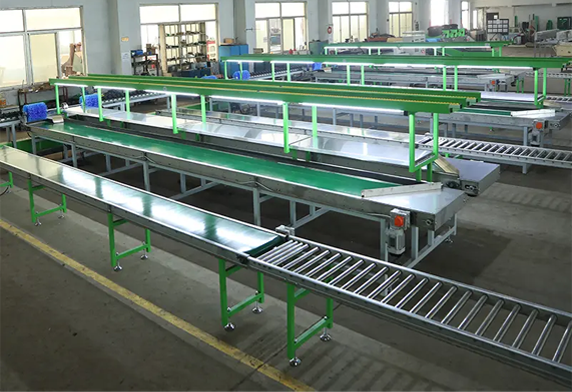
The Advanced PS Foam Food Container Production Line for Food Packaging is a specialized manufacturing system designed to produce lightweight, insulated, and cost-effective foam food containers used across the global food packaging industry. As demand for hygienic, convenient, and efficient takeaway packaging continues to grow, PS foam container production lines have become an important part of modern food packaging manufacturing. These production systems are engineered to convert raw polystyrene materials into a wide range of disposable food containers with stable output, consistent quality, and strong production efficiency.
In today’s competitive food packaging market, businesses need packaging solutions that support freshness, reduce heat loss, improve transport convenience, and meet large-scale supply demands. A PS foam food container production line offers exactly that by enabling high-volume manufacturing of foam trays, clamshell boxes, lunch boxes, meat trays, takeaway containers, and other food-grade packaging products. With advanced automation, precise temperature control, and optimized forming performance, this type of production line is widely used in packaging factories, food service supply chains, export packaging facilities, and disposable container manufacturing plants.
This article provides a clear, SEO-friendly, and industry-focused overview of the advanced PS foam food container production line, including its definition, working principle, core advantages, technical specifications, product applications, and key considerations for buyers and manufacturers. The information below is designed for use in blog posts, category pages, product pages, or industry landing pages, and contains only general industry knowledge without company-specific recommendations.
An advanced PS foam food container production line is a complete manufacturing system used to produce containers made from polystyrene foam, commonly known as PS foam or expanded polystyrene foam. These containers are widely used in food packaging because they are lightweight, insulating, moisture-resistant, and economical. The production line typically integrates several processing stages, such as material feeding, heating, foaming, sheet forming, molding, cutting, shaping, and stacking.
The term “advanced” usually refers to production lines that feature higher automation, improved energy efficiency, more stable temperature and pressure control, better forming accuracy, and enhanced output consistency. Compared with traditional or semi-automatic systems, an advanced PS foam food container production line can reduce labor dependency, improve product uniformity, and support continuous industrial-scale production.
In the food packaging industry, these production lines are valued for their ability to manufacture containers that preserve product quality while meeting market requirements for hygiene, practicality, and low production cost. For manufacturers seeking scalable disposable packaging production, PS foam food container production lines remain a practical and efficient solution.
Food packaging is not only about appearance; it also affects freshness, transport safety, convenience, and customer satisfaction. PS foam containers are widely used because they provide thermal insulation, cushioning, and a low-cost packaging option for many food applications. An advanced production line allows manufacturers to meet high demand while maintaining stable packaging quality.
In the modern food service industry, businesses require containers that can support hot meals, cold items, fast delivery, and takeaway distribution. PS foam food containers are especially useful in restaurants, catering services, supermarkets, food courts, institutional kitchens, and meal distribution systems. The production line makes it possible to supply these markets with large quantities of standardized packaging products.
From an industrial perspective, advanced production lines also help improve manufacturing efficiency, minimize material waste, and optimize resource use. This makes them important for companies that want to compete in a cost-sensitive but quality-driven packaging market.
A PS foam food container production line is built to perform several core functions that transform raw material into finished packaging products. These typically include:
By combining these steps into a continuous or semi-continuous production process, manufacturers can produce food containers in large volumes with reduced manual intervention. This is one of the main reasons why PS foam food container production lines remain highly relevant in mass packaging manufacturing.
An advanced PS foam food container production line offers several important advantages for food packaging manufacturers and end users. These advantages support both production efficiency and product performance.
| Advantage | Description | Industry Benefit |
|---|---|---|
| High Production Efficiency | Supports continuous manufacturing with fast output speed. | Helps meet large-volume market demand. |
| Stable Product Quality | Advanced control systems improve consistency in shape and thickness. | Reduces defects and improves packaging reliability. |
| Low Manufacturing Cost | PS foam materials are relatively economical and efficient to process. | Supports cost-effective packaging production. |
| Thermal Insulation | Foam structure helps retain food temperature during transport and delivery. | Improves food service performance. |
| Lightweight Packaging | Finished containers are easy to handle, store, and transport. | Reduces logistics burden and handling costs. |
| Automation Support | Advanced systems reduce manual operation and improve workflow. | Improves labor efficiency and production control. |
| Versatile Product Range | Can produce trays, clamshell boxes, lunch containers, and food boxes. | Supports diverse packaging applications. |
A PS foam food container production line can be configured to manufacture a wide range of disposable packaging products. These products are used in both retail and commercial food service environments.
| Container Type | Typical Use | Main Features |
|---|---|---|
| Foam Lunch Box | Takeaway meals, restaurant delivery, canteen service | Divided compartments, lightweight design, heat retention |
| Foam Clamshell Container | Burgers, sandwiches, snacks, combo meals | Hinged lid, secure closure, easy handling |
| Foam Meat Tray | Fresh meat, seafood, poultry, supermarket display | Shock absorption, moisture resistance, hygienic presentation |
| Foam Food Tray | Fast food, prepared meals, catering | Simple structure, low weight, efficient stacking |
| Foam Takeaway Box | Delivery meals, street food, takeout services | Convenient packing, insulation support, disposable use |
| Foam Compartment Tray | Multi-item meal packaging | Separate sections for different foods, improved presentation |
Although exact machine configurations may vary, the production process generally follows several standard steps. Understanding these steps is useful for manufacturers, buyers, and packaging industry professionals.
Modern advanced production lines often integrate automation controls, temperature monitoring, pressure adjustment, and synchronized operation to ensure the entire process runs efficiently. This results in greater product consistency and lower production variation.
Advanced PS foam food container production lines are designed with several technical features that improve manufacturing performance. These features may include enhanced heating systems, high-precision molding, adjustable output settings, and intelligent monitoring functions.
| Technical Feature | Purpose | Production Impact |
|---|---|---|
| Automatic Feeding System | Delivers raw material continuously and evenly | Improves feeding stability and reduces labor input |
| Temperature Control System | Maintains proper heating conditions during processing | Supports product quality and material efficiency |
| Precision Molds | Shapes containers accurately according to specifications | Improves appearance, size consistency, and function |
| Energy-Saving Design | Reduces unnecessary power consumption | Lowers operating cost and improves sustainability |
| Automated Stacking Unit | Collects finished products in organized stacks | Supports efficient downstream packaging |
| Touchscreen Operation | Allows operators to monitor and adjust production settings | Improves usability and process control |
| Safety Protection System | Helps prevent overload, overheating, or abnormal operation | Enhances production safety and equipment durability |
The exact specification of a PS foam food container production line depends on production capacity, product type, automation level, and factory requirements. The table below shows common reference specifications used in the industry.
| Specification Item | Typical Range / Value |
|---|---|
| Production Capacity | Medium to high output, depending on mold and automation configuration |
| Container Types | Lunch boxes, trays, clamshell boxes, takeaway containers, meat trays |
| Control System | PLC-based or semi-automatic control system |
| Heating Method | Electric heating or other controlled thermal systems |
| Operation Mode | Automatic, semi-automatic, or customized production line setup |
| Mold Material | High-durability metal molds for repeated industrial use |
| Product Thickness | Adjustable according to packaging application |
| Power Requirement | Varies based on machine size and heating configuration |
| Factory Space | Depends on capacity, layout, and auxiliary equipment |
| Operator Requirement | Typically fewer operators in advanced automated setups |
Advanced PS foam food container production lines support a broad range of food packaging applications. Their products are used wherever cost-effective disposable packaging with insulation and protection is required.
Because of their lightweight structure and protective performance, PS foam containers remain useful in many food service segments where simple, efficient, and affordable packaging is preferred.
PS foam offers a combination of packaging properties that make it suitable for food container manufacturing. These characteristics are important in evaluating the performance and value of the production line.
| Material Characteristic | Benefit for Food Packaging |
|---|---|
| Lightweight Structure | Reduces shipping and handling burden |
| Thermal Insulation | Helps maintain food temperature |
| Moisture Resistance | Supports packaging of wet or hot food items |
| Cushioning Ability | Protects food during transportation |
| Cost Efficiency | Allows economical mass production |
| Moldability | Enables production of different container shapes and sizes |
Automation plays a major role in the performance of an advanced PS foam food container production line. Automated systems improve consistency, reduce manual handling, and allow manufacturers to maintain stable output over long production cycles. This is especially important when producing large quantities of disposable food containers for national or export markets.
Higher levels of automation can reduce the risk of product defects caused by human error. They also make it easier to control key variables such as temperature, forming time, thickness, and cutting precision. As a result, automated PS foam container production lines are often preferred by manufacturers seeking higher efficiency and better long-term production stability.
The final quality of PS foam food containers depends on several production factors. Manufacturers should pay attention to these elements to ensure stable output and customer satisfaction.
In a competitive packaging market, quality consistency is as important as speed and cost. A well-designed advanced PS foam food container production line helps manufacturers achieve all three.
The food packaging industry continues to evolve due to changes in consumer behavior, delivery demand, and packaging efficiency requirements. While market preferences may vary by region, several general trends influence PS foam food container production.
These trends support continued interest in advanced PS foam food container production lines, especially in regions where disposable food packaging remains a practical industrial solution.
When evaluating a PS foam food container production line, manufacturers usually consider several important factors. Choosing the right configuration can influence long-term production efficiency, product quality, and operating cost.
| Selection Factor | Why It Matters |
|---|---|
| Production Capacity | Should match target output and market demand |
| Automation Level | Affects labor requirements and process stability |
| Mold Flexibility | Important for making multiple product types |
| Energy Consumption | Directly influences operating cost |
| Maintenance Convenience | Helps reduce downtime and support continuous production |
| Product Quality Requirements | Determines how precise the machine setup should be |
| Factory Layout | Must match the machine footprint and workflow |
Proper maintenance is essential for keeping a PS foam food container production line running smoothly. Regular inspection and preventive care help extend machine life and maintain product consistency.
Good operation practices reduce material waste, minimize production interruptions, and improve overall factory efficiency. For large-scale food packaging manufacturers, this can have a direct impact on profitability and delivery performance.
To support search visibility, the following industry-related keyphrases are often associated with this topic:
These keywords reflect common search intent in the packaging machinery and food container manufacturing sectors. Using them naturally within product and industry pages can help improve relevance for organic search.
The Advanced PS Foam Food Container Production Line for Food Packaging remains a valuable manufacturing solution for companies producing disposable food containers at scale. Its combination of efficiency, cost-effectiveness, insulation performance, and product versatility makes it suitable for a wide range of food packaging applications. As demand for takeaway meals, catering supplies, and hygienic disposable packaging continues to grow, advanced production systems help manufacturers stay competitive through stable output and consistent quality.
For businesses in the food packaging industry, investing in an advanced PS foam food container production line can support long-term manufacturing efficiency, product diversity, and market responsiveness. Whether used for lunch boxes, clamshell containers, trays, or takeaway packaging, this production line provides a reliable foundation for industrial food packaging operations.
By understanding the process, technical features, advantages, and specifications of PS foam food container production lines, manufacturers and packaging professionals can make more informed decisions and develop stronger production strategies in the evolving global food packaging market.
Telefon:+86 15253598306
E-posta:sales@fushijixie.cn
Adres:Langao Sanayi Bölgesi, Longkou Şehri, Shandong Eyaleti, 265709, Çin


Telif Hakkı © Longkou Fushi Paketleme Makineleri A.Ş., LTD. Her hakkı saklıdır. Site haritası
Bu web sitesi, web sitemizde en iyi deneyimi yaşamanızı sağlamak için çerezleri kullanır.

 English
 Español
 Portugues
 Pусский
 Français
 العربية
 Indonesia
 Tiếng Việt
 فارسی



 Telefon
Yorum
(0)