

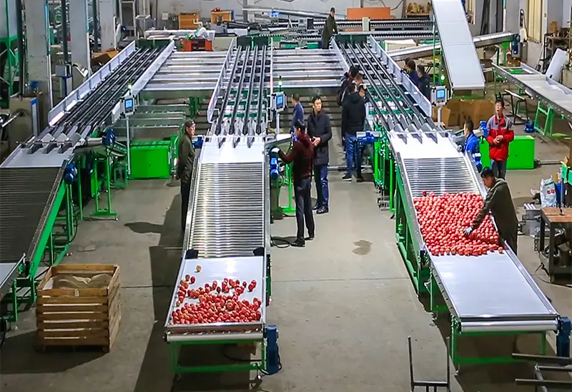
A fruit processing machine for apple, mango, and orange processing is a specialized industrial solution designed to wash, sort, peel, extract, crush, filter, pasteurize, fill, and package fruit-based products efficiently. These machines are widely used in juice factories, beverage plants, puree production lines, jam and pulp processing facilities, and commercial food manufacturing operations. By integrating multiple processing steps into one continuous workflow, fruit processing equipment helps businesses improve productivity, reduce waste, maintain hygiene, and deliver consistent product quality.
In modern food manufacturing, demand for fresh-tasting fruit juice, pulp, concentrate, nectar, and blended drinks continues to grow. Apples, mangoes, and oranges are among the most commercially important fruits in global processing industries because they are widely available, highly nutritious, and suitable for a broad range of finished products. A well-designed fruit processing machine line can handle these fruits with high efficiency while preserving natural flavor, color, aroma, and nutritional value.
This page provides a clear, SEO-friendly overview of apple processing equipment, mango processing machinery, and orange processing machines, including definitions, advantages, applications, typical specifications, workflow stages, and important purchasing considerations. The content is suitable for industrial blogs, product category pages, directory pages, and industry information pages.
A fruit processing machine is an industrial system that converts raw fruits into usable food and beverage ingredients or finished products. Depending on the production purpose, the machine line may include fruit washing machines, sorting conveyors, pulpers, crushers, peelers, juicers, extractors, de-seeders, filters, sterilizers, evaporators, filling machines, and packaging systems. For apple, mango, and orange processing, the machinery configuration changes based on fruit structure, seed content, peel thickness, juice yield, and final product type.
Fruit processing machines are built to support large-scale food production while meeting strict hygiene and safety standards. These machines are commonly made from stainless steel, feature automated control systems, and are designed for easy cleaning and maintenance. In many production lines, automation reduces manual labor and improves consistency across every batch.
Apple, mango, and orange are three of the most processed fruits in the global fruit and beverage industry. Each fruit has strong market demand and can be converted into multiple value-added products. Apples are commonly used for juice, puree, cider base, jams, and concentrates. Mangoes are widely processed into pulp, nectar, concentrates, baby food, dairy flavoring, and desserts. Oranges are mainly processed into juice, concentrate, essential oil by-products, and beverage blends.
The importance of fruit processing lies in its ability to extend shelf life, reduce post-harvest losses, add value to raw agricultural products, and support year-round supply. Instead of selling only fresh fruit, producers can create stable, high-demand products that are easier to store, transport, and distribute. For manufacturers, a fruit processing machine line is a strategic investment that supports profitability and market expansion.
A complete fruit processing line may include several machine categories depending on production goals. The most common equipment types for apple, mango, and orange processing are listed below.
| Machine Type | Main Function | Typical Use in Fruit Processing |
|---|---|---|
| Fruit Washing Machine | Removes dirt, dust, residues, and surface contaminants | Prepares apples, mangoes, and oranges for further processing |
| Sorting and Grading Conveyor | Separates fruits by size, weight, and quality | Improves consistency and removes damaged fruit |
| Peeling Machine | Removes peel from fruit | Useful for mango and some apple processing lines |
| Crusher or Pulper | Crushes fruit into pulp or mash | Used in apple puree, mango pulp, and orange juice preparation |
| Juice Extractor | Separates juice from fruit solids | Common in apple and orange juice processing |
| Finisher | Removes seeds, fibers, and coarse particles | Improves texture and smoothness of juice or puree |
| Pasteurizer | Heat-treats product to reduce microorganisms | Extends shelf life and ensures food safety |
| Evaporator | Removes water content from juice | Used for concentrate production |
| Filling and Packaging Machine | Fills product into bottles, pouches, or cartons | Supports final product packaging |
Apple processing machines are designed to handle the specific characteristics of apples, including their firm texture, high juice content, and ability to be transformed into many product forms. A typical apple processing line begins with receiving and washing the apples, followed by sorting, crushing, pressing, filtering, pasteurizing, and packaging. In some cases, apples are also processed into puree, concentrate, or blended fruit beverages.
Apple processing equipment is valued for its efficiency, high juice recovery rate, and ability to preserve natural apple flavor. Because apples contain edible flesh and relatively easy-to-process internal structure, they are suitable for both small and large-scale industrial production. Apple juice processing is especially popular because of its stable consumer demand and compatibility with mixed fruit formulations.
Mango processing machines are used to convert ripe mangoes into pulp, nectar, juice base, concentrate, and dessert ingredients. Mangoes have soft flesh, a large pit, and thick peel, which makes the right equipment essential for efficient processing. A mango processing machine line often includes washing, de-stoning, peeling, pulping, refining, heating, and aseptic filling systems.
Mango is widely processed into pulp because pulp can be stored, transported, and used later in multiple products. The fruit is highly seasonal in many regions, so industrial processing helps stabilize supply throughout the year. Mango processing machinery is especially valuable in tropical and subtropical markets where mango production is abundant.
Orange processing machines are used to produce orange juice, juice concentrate, beverage blends, and by-products such as peel oil and animal feed residue. Orange juice processing is one of the most established segments in the fruit processing industry. The process typically includes washing, grading, extracting juice from the fruit, removing seeds and pulp residue, pasteurizing, and packing.
Because oranges have a thick peel and segmented structure, dedicated extraction equipment is essential to achieve efficient juice recovery while maintaining flavor quality. Orange processing lines are often designed for high throughput and can be configured for fresh juice, concentrate, or shelf-stable beverages.
Fruit processing machines provide several operational, economic, and product-quality benefits. These advantages make them essential in modern food manufacturing.
| Advantage | Description | Business Impact |
|---|---|---|
| High Efficiency | Automated systems process large volumes in less time | Improves production capacity and output |
| Consistent Quality | Standardized processing reduces batch variation | Supports brand reliability and customer satisfaction |
| Better Hygiene | Stainless steel construction and closed systems reduce contamination | Meets food safety standards |
| Lower Labor Costs | Automation reduces manual handling and repetitive tasks | Improves operational efficiency |
| Reduced Waste | Efficient extraction and separation improve raw material usage | Increases profitability |
| Longer Shelf Life | Pasteurization and aseptic systems extend product stability | Expands market reach and storage flexibility |
| Flexible Applications | Equipment can be adjusted for juice, puree, nectar, or concentrate | Supports multiple product lines |
Fruit processing machinery is used in a wide variety of food and beverage applications. The same core processing principles can support different finished products depending on equipment design and process configuration.
Specifications can vary widely depending on production scale, automation level, and product type. The table below provides a general guide to common technical parameters used in apple, mango, and orange processing systems.
| Specification | Common Range or Option | Notes |
|---|---|---|
| Processing Capacity | 500 kg/h to 20,000 kg/h | Depends on plant size and product demand |
| Material | Food-grade stainless steel | Commonly SUS304 or SUS316 |
| Automation Level | Semi-automatic or fully automatic | Selected based on budget and production target |
| Power Supply | Customized by region | Usually 380V, 50Hz or similar industrial standard |
| Product Types | Juice, pulp, puree, concentrate, nectar | Can be configured for multiple outputs |
| Heating Method | Steam or electric | Used in pasteurization and concentration stages |
| Packaging Format | Bottle, pouch, carton, aseptic bag | Depends on market and storage requirements |
| Control System | Manual, PLC, or touchscreen automation | Improves precision and ease of operation |
When selecting a fruit processing machine for apple, mango, and orange products, several features are especially important. These features influence productivity, hygiene, maintenance, and product quality.
Product quality in fruit processing depends on maintaining freshness, flavor integrity, color stability, texture, and microbiological safety. A modern fruit processing machine helps achieve these objectives through controlled washing, cutting, crushing, extraction, heating, and packaging. Since manual handling may introduce inconsistency or contamination, automated systems are preferred in commercial production.
In apple processing, controlled pressing and filtration help produce clear and stable juice. In mango processing, pulping and refining reduce fibrous texture while preserving rich fruit flavor. In orange processing, precise extraction equipment helps achieve high juice yield without excessive bitterness from the peel. These technical benefits directly influence market acceptance and customer satisfaction.
Food safety is one of the most important concerns in any fruit processing line. Since fruit products are often consumed directly, all equipment must support sanitary operation. Proper design includes smooth welds, easy-access cleaning points, drainable pipelines, and closed processing systems that reduce exposure to air and contaminants.
Pasteurization is commonly used to reduce microbial loads and extend shelf life. In high-volume plants, aseptic processing and sterile packaging can provide longer storage life without compromising quality. Regular cleaning, maintenance, and process monitoring are necessary to keep equipment performing safely and efficiently.
| Fruit | Main Output | Special Processing Need | Common Equipment Focus |
|---|---|---|---|
| Apple | Juice, puree, concentrate | Pressing and filtration | Crusher, press, finisher, pasteurizer |
| Mango | Pulp, nectar, concentrate | De-stoning and fiber removal | Washer, peeler, pulper, refiner, filler |
| Orange | Juice, concentrate | Efficient juice extraction | Washer, extractor, finisher, pasteurizer |
Fruit processing machines are available in different production scales to support small workshops, medium-sized factories, and large industrial plants. Smaller systems are suitable for local fruit processing businesses, test production, and niche beverage brands. Medium-scale lines serve regional manufacturers with steady demand. Large-scale continuous systems are designed for high-capacity operations and export-oriented production.
The right production scale depends on fruit supply, target market, product type, labor availability, packaging format, and investment budget. Choosing a machine line that matches current and future demand is essential for long-term success.
The fruit processing industry continues to move toward automation, energy efficiency, clean-label processing, and higher product traceability. Manufacturers increasingly demand compact equipment, modular production lines, and digital control systems that improve visibility and simplify operation. At the same time, market interest in natural beverages, pulp-based products, and functional fruit drinks is supporting steady demand for apple, mango, and orange processing machines.
Sustainability is also becoming more important. Efficient fruit processing machinery helps reduce water consumption, energy usage, and raw material waste. By recovering more usable juice or pulp from each batch, producers can increase yield and lower environmental impact at the same time.
Investing in a fruit processing machine line can create significant business advantages. It allows producers to move beyond raw fruit sales and enter higher-value product categories. This improves profit margins and creates opportunities for branding, private labeling, and export sales. In addition, processed fruit products are less vulnerable to seasonal fluctuations than fresh fruit, giving manufacturers greater commercial stability.
For many food businesses, apple, mango, and orange processing equipment serves as the foundation for long-term expansion. Whether the goal is to produce fresh juice, aseptic pulp, or concentrated beverage ingredients, industrial fruit machinery provides the technology needed to turn raw agricultural inputs into marketable consumer goods.
A fruit processing machine for apple mango and orange processing is an essential solution for modern fruit juice, pulp, and beverage production. It supports efficient washing, extraction, pulping, pasteurization, and packaging while improving hygiene, quality, and productivity. Apple, mango, and orange each require different processing approaches, but all benefit from advanced industrial equipment designed for consistency and food safety.
For businesses in the fruit and beverage sector, understanding machine types, workflow stages, technical specifications, and processing advantages is the first step toward building an effective production line. With the right configuration, fruit processing equipment can help manufacturers increase output, reduce waste, improve shelf life, and meet growing consumer demand for high-quality fruit products.
```
Telefon:+86 15253598306
E-posta:sales@fushijixie.cn
Adres:Langao Sanayi Bölgesi, Longkou Şehri, Shandong Eyaleti, 265709, Çin


Telif Hakkı © Longkou Fushi Paketleme Makineleri A.Ş., LTD. Her hakkı saklıdır. Site haritası
Bu web sitesi, web sitemizde en iyi deneyimi yaşamanızı sağlamak için çerezleri kullanır.

 English
 Español
 Portugues
 Pусский
 Français
 العربية
 Indonesia
 Tiếng Việt
 فارسی



 Telefon
Yorum
(0)